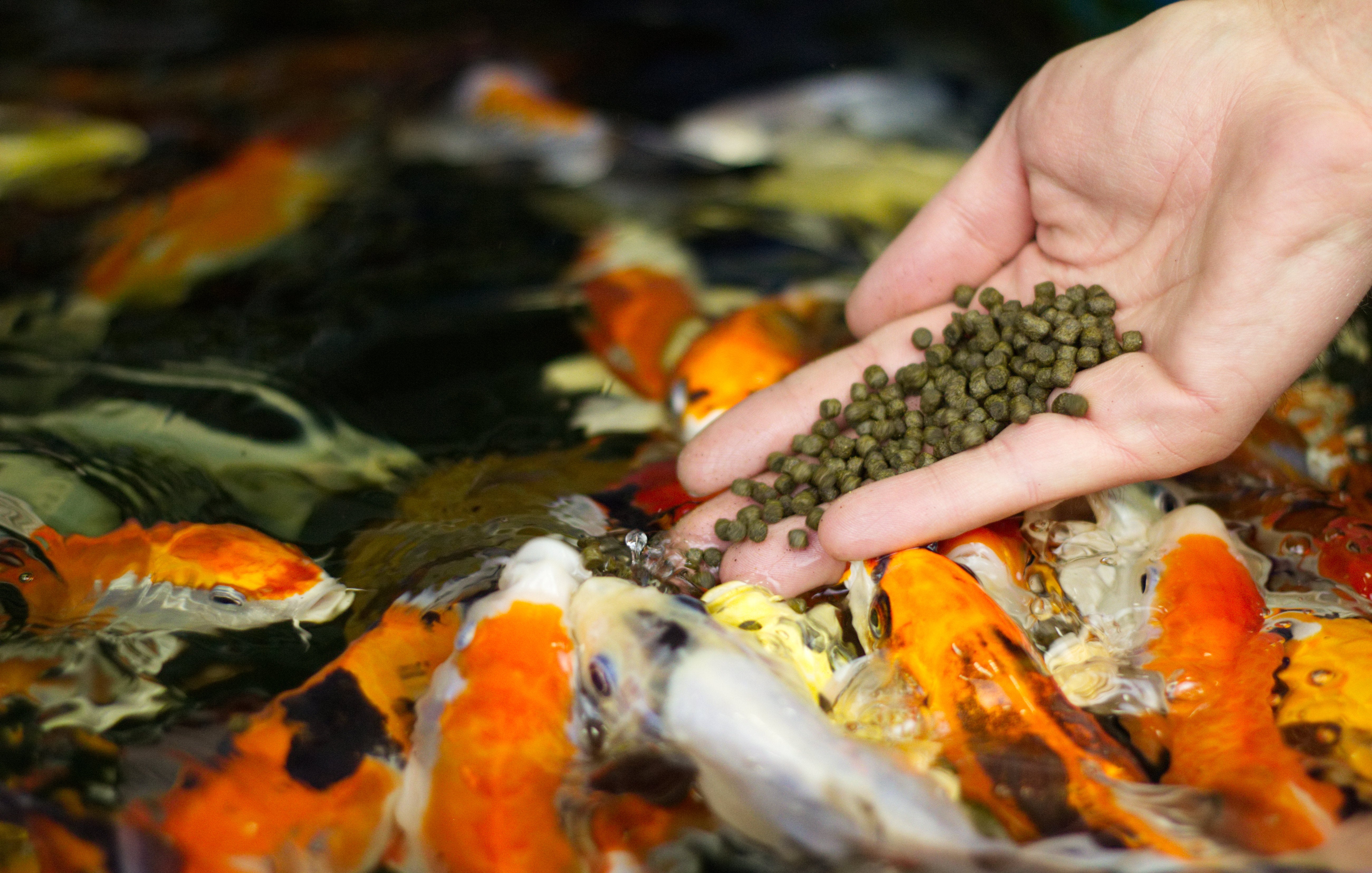


The koi carp belongs to the group of omnivores, with its diet consisting mainly of the smallest aquatic organisms. [1] .
The main components of koi food
Based on intestinal examinations of two-year-old carp, the food components found can be divided into three categories:
- Crustaceans (Daphnia) [2]
- Insects (Chironomidae) [2]
- Food components (algae, plants, particles, etc.) [2]
The most important crustaceans are water fleas, while midge larvae are the primary insects present. The composition of a fish's intestinal contents varies depending on the availability of prey. Foods that are easy to ingest and abundant are preferred. Throughout the year, this can include insect larvae, water fleas, plant matter, snails, and similar small animals. [3] .
Natural food has a high water content and a low nutrient concentration. Therefore, carp must consume a large quantity of food. In its dry matter (excluding water), natural food sometimes has a high protein and fat content, up to 60% protein and 28% fat. [4] . On average, the protein content in natural foods is stated to be 55%. [3] .
The debate about the correct protein/fat ratio
A frequently discussed topic in koi nutrition is the correct protein-to-fat ratio in their food. This should always be based on the natural diet of koi carp. Koi farms and fish farms still use natural food for raising their baby koi and juvenile fish, as this represents the optimal nutrition.
Conclusion: What is the most important thing when it comes to koi nutrition?
In summary, it is not the percentage of protein and fat that is crucial for koi nutrition, but rather the total amount of protein and fat ingested. The protein-to-fat ratio is also relevant. Carbohydrates play a minor role in koi nutrition. From a nutritional standpoint, koi require only small amounts of carbohydrates for growth.
Scientific sources:
[1] Geldhauser, F. & Gerstner, P. (2011): The Pond Farmer. Carp and Other Fish . 9th revised edition. Ulmer Stuttgart, pp. 76–93.
[2] Barthelmes, D. (1967): Estimation of natural food conditions in carp ponds as a basis for improving the condition of carp and increasing yields . Dt. Fischerei-Ztg 14 (11), 330 – 343.
[3] Schäperclaus, W. & Lukowicz, MV (1998): Textbook of Pond Management . 4th revised edition. Parey. Berlin, pp. 51–209.
[4] Schreckenbach, K. (2015): Nutrition of carp in ponds: Koi hobby . Institute for Inland Fisheries e. V. Potsdam-Sacrow.