

Short-chain carbohydrates are hardly present in the natural diet of carp, as the carbohydrate content of their natural food is low. If animal food sources are available to carp, crustaceans, insect larvae, or mollusks serve primarily as their main food source. Otherwise, carp also utilize available plant-based food sources such as algae and other plant matter.
The carbohydrate content of the aforementioned plant and animal food sources is comparatively low. Based on this, carp are not dependent on carbohydrates and derive their energy primarily from fat and protein. This was confirmed in a study where carp were kept exclusively on carbohydrate-free feed without showing any signs of deficiency [1] . Carbohydrates can be metabolized in the koi organism in two ways during digestion. Firstly, due to their rapid breakdown, carbohydrates are primarily used for energy supply. Secondly, in the case of an oversupply of short-chain sugar compounds, the energy can be stored. This occurs in the form of glycogen in the liver or muscle tissues, or in adipocytes as adipose tissue.
When there is an excess of carbohydrates combined with insufficient protein intake, this fat storage increases. The result is poor growth and reduced feed conversion [1] . Thus, a low-protein, high-carbohydrate diet leads to obesity in koi, which, due to the lack of protein, cannot grow.
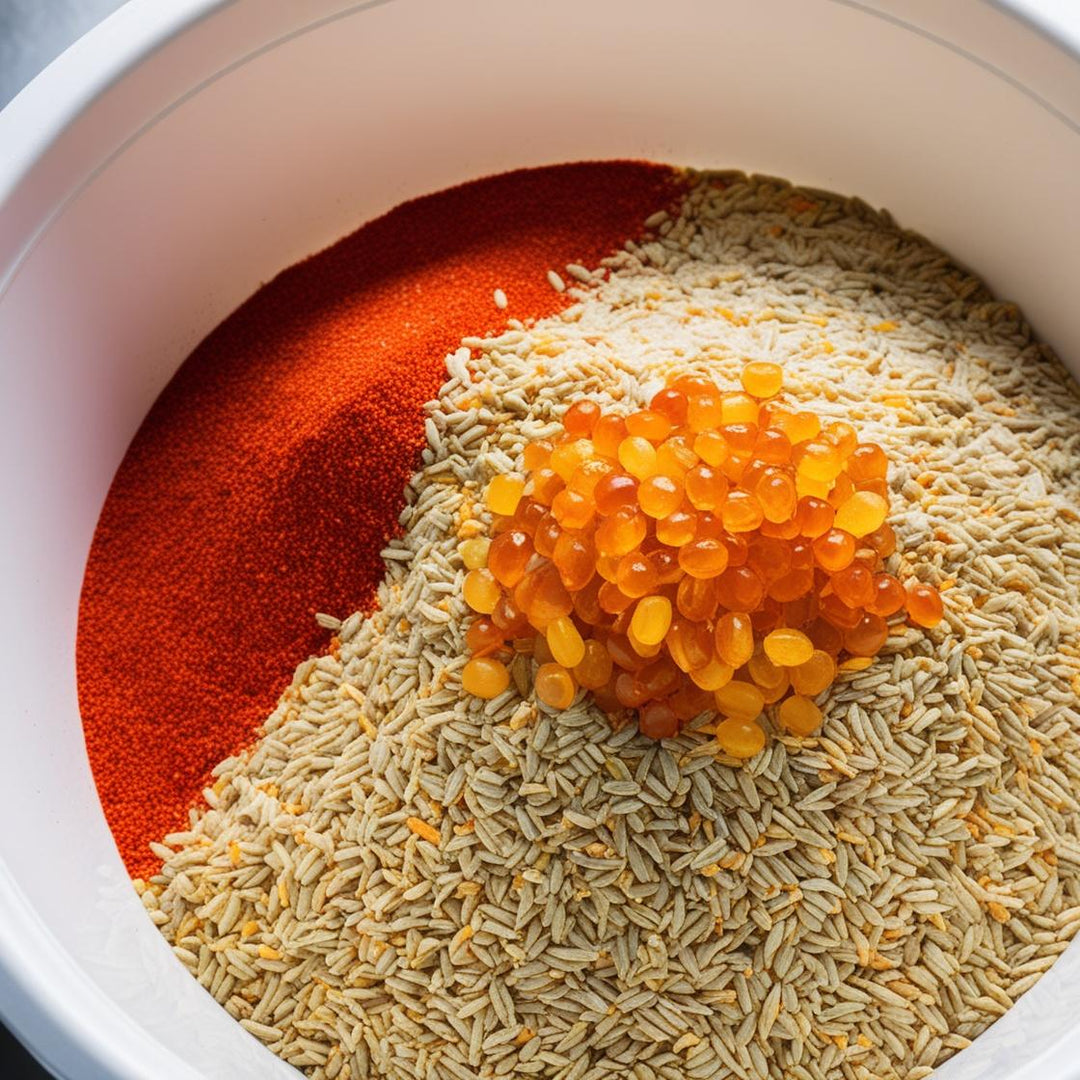
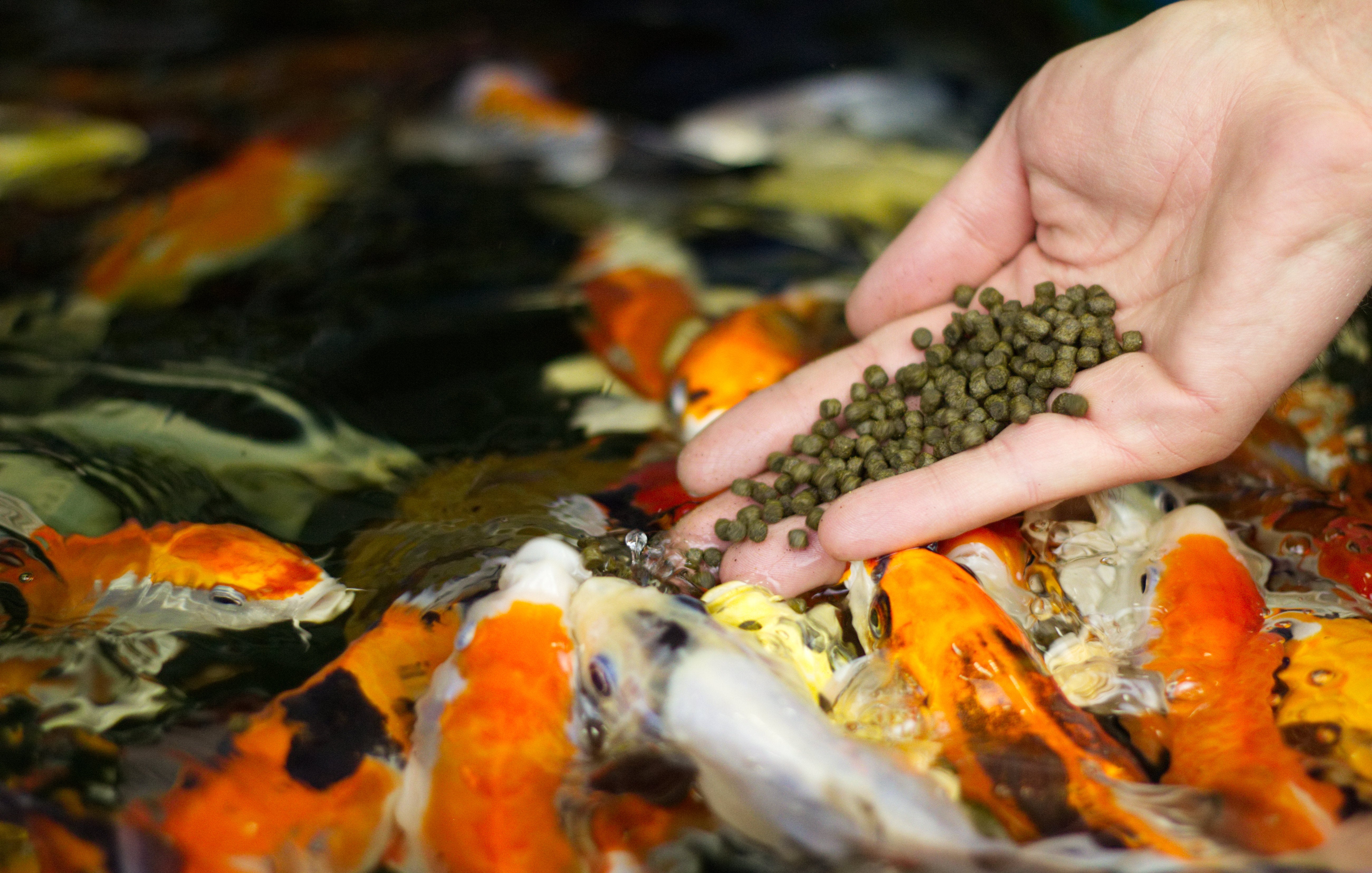
The carbohydrate content in feedstuffs comes primarily from cereal starch (especially wheat). Cereal starch exhibits high digestibility and can be digested by carp up to 85–90% [2] . The carbohydrate content in high-quality koi food should be below 20%. From a production standpoint, it is not possible to completely eliminate carbohydrates in extruded koi food.
Scientific sources:
[1] Wilson, RP (1991): Handbook of Nutrient Requirements of Finfish . CRC press. Boston, p. 35.
[2] Schäperclaus, W. & Lukowicz, MV (1998): Textbook of Pond Management . 4th revised edition. Parey. Berlin, pp. 51–209.